
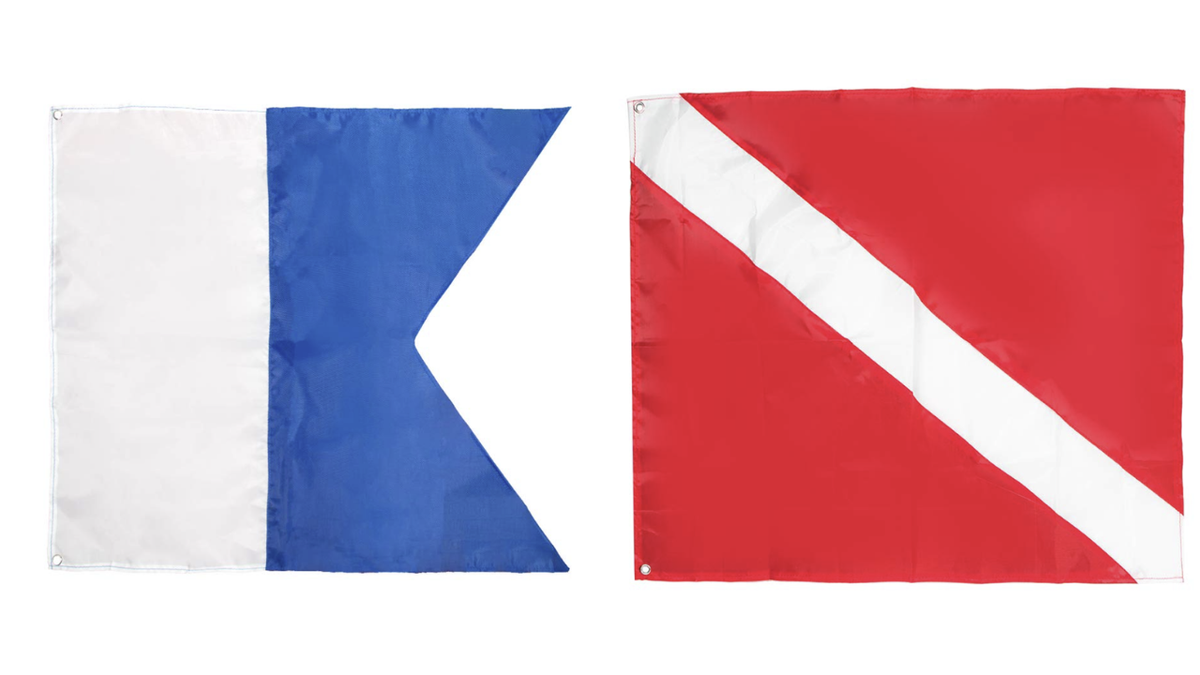
Short answer: red and blue dive flags both warn boats that divers are in the water — they're just used in different parts of the world. The red flag is the North American standard. The blue and white Alpha flag is the international one, and it's what's recognised in Australian waters.
The red flag: diver down
A red rectangle with a white diagonal stripe. It's most common in the United States and Canada, and it means recreational divers or snorkellers are in the water below. Boaters are expected to slow down and keep clear, with the specific distance set by local rules.
It was designed by divers, for divers — its whole purpose is marking a person in the water.
The blue flag: Alpha
A blue and white swallowtail, representing the letter "A" in the international code of signals. It's used internationally — across Europe, Australia and open water — and it means "I have a diver down; keep well clear at slow speed."
There's a subtlety here that trips people up. Alpha originally signalled that a vessel was restricted in its ability to manoeuvre because of diving operations. It protects the boat from collision as much as it protects the diver. In practice it does both, but the distinction explains why the two flags are governed differently.
Which one applies in Australia
The Alpha flag. If you've bought gear from an American site or learned from American material, you may have ended up with the red flag — it's widely sold and widely recognised by divers, but it isn't the signal Australian boaters are taught to look for.
Carrying both is worth considering if you dive overseas. At home, fly Alpha.
Why the flag matters more than people think
The flag is not decoration and it isn't a formality. It's the only thing telling an approaching skipper that there's a person under the surface.
The risk people underestimate is separation. Divers surface where the dive takes them, which can be a considerable distance from where the flag is sitting. A skipper who slows for your flag is slowing for the flag — not for you, fifty metres away, coming up somewhere they aren't looking.
That's the mechanism behind most diver-strike incidents, and it applies just as much in shallow water as deep. A snorkeller or a diver working a hull in three metres is no easier to see than one at twenty.
Getting it right
- Fly it whenever anyone's under. Snorkelling and spearfishing count, not just scuba.
- Stay near your flag. Plan the dive so you surface close to it, and tow a float if you're moving.
- Make it visible. Rigid flags stay readable from every angle; a limp cloth flag disappears edge-on.
- Surface with your head up. Look, listen, and ascend with a hand above you.
- Take it down when you're out. A flag flying with nobody in the water is misleading and can trouble others.
Check your local rules and regulations
Flag size, how far vessels must stay back, and whether a flag is required when diving from shore all vary between states and territories — and rules change. Before you dive, check the current requirements with your state's maritime authority. Requirements are different again for commercial and paid underwater work.
Pick the flag that suits where you dive
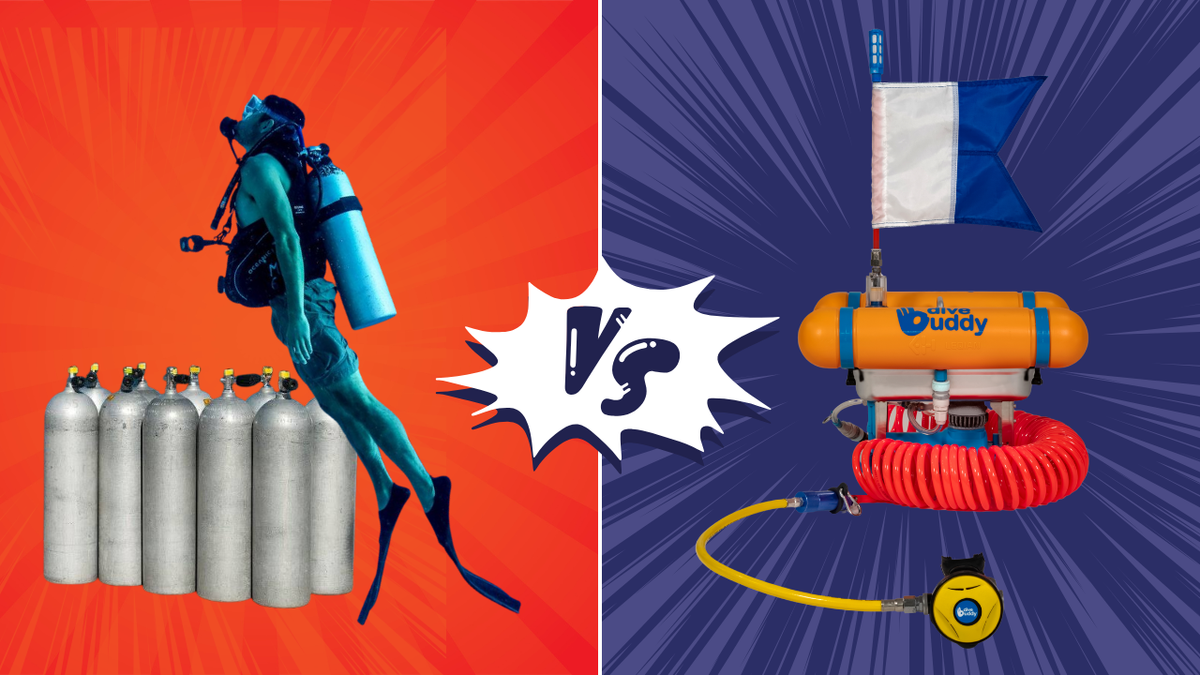
Every DiveBuddy Air portable dive compressor comes with a dive flag, and you choose which one — red or blue. If you're diving Australian waters, take the blue Alpha flag. If you spend your time in North America, take the red.
The system also handles the separation problem better than a boat does. The unit floats directly above you and follows you as you move, so the flag marks where you actually are rather than where you got in. Four hours of air, nothing on your back, and a flag that goes where you go.



Leave a comment
This site is protected by hCaptcha and the hCaptcha Privacy Policy and Terms of Service apply.